Design Systems That Scale: Bridging the Gap Between Figma and Frontend
8/3/2026
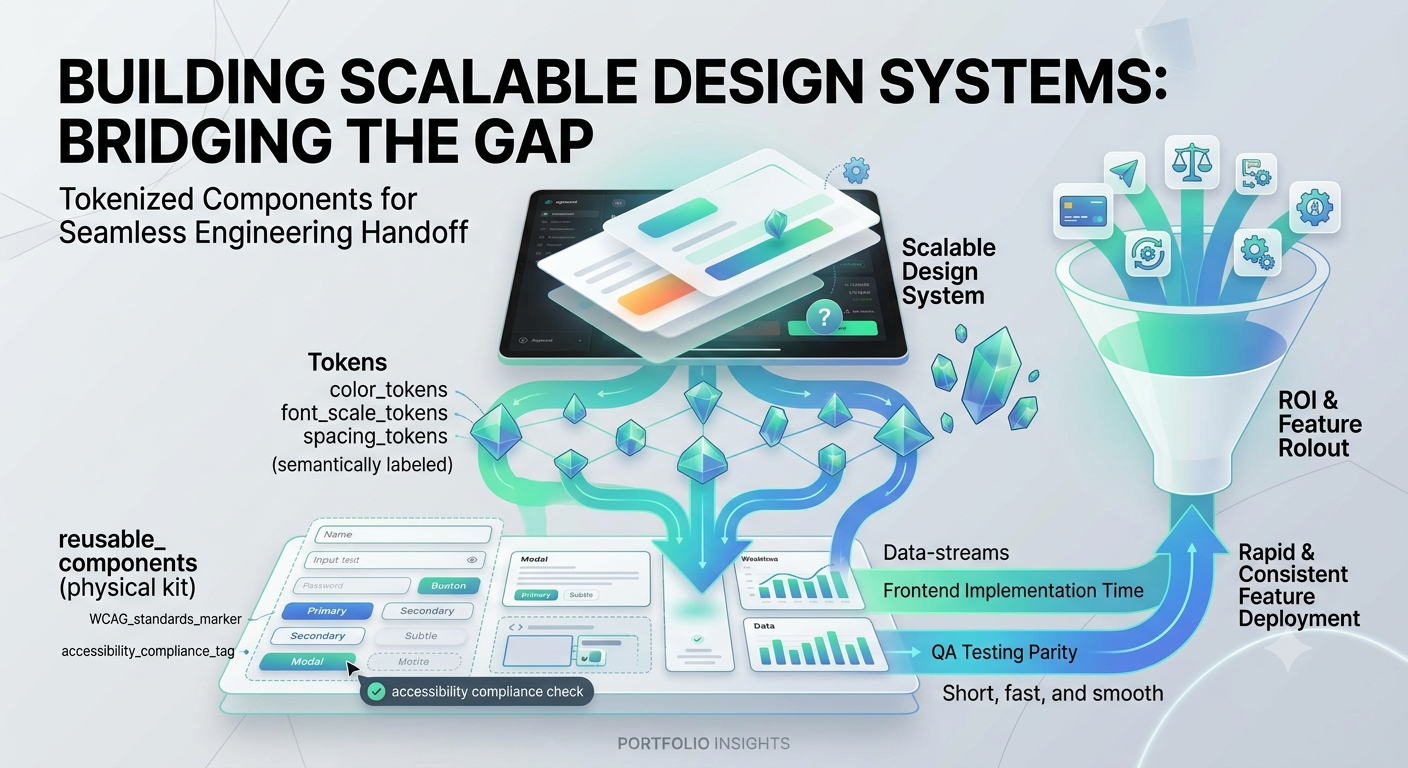
As web applications grow from MVP status to full-scale enterprise products, UI fragmentation becomes a silent productivity killer. Mismatched button styles, inconsistent spacing, and duplicate code slow down frontend development and dilute brand identity.
Whether we are building a high-conversion minimalist e-commerce store or a multi-tenant workspace, establishing a rigid yet adaptable Design System is the first step toward scalable software architecture.
1. Tokenization: The Single Source of Truth
Design tokens are the semantic variables that store visual design attributes—colors, typography scales, spacing units, and shadow values.
- Design Side: Styled in Figma styles and variables.
- Codebase Side: Exported directly as CSS variables or Tailwind tokens.
When a brand updates its primary accent color or dark mode palette, changing a single token updates both the design files and the production code automatically, eliminating manual stylesheet edits.
2. Building for Reusability and Accessibility
A scalable component library relies on modular building blocks. Buttons, input fields, dropdowns, and modal wrappers should be agnostic to specific page contexts. Designing components with built-in accessibility standards (such as WCAG-compliant contrast ratios and accessible keyboard navigation states) ensures your product is ready for global enterprise compliance from day one.
3. Real-World Impact on Business Metrics
Investing in a unified design system isn't just an internal aesthetic choice; it delivers measurable ROI:
- Faster Time-to-Market: Feature rollout speed increases because developers assemble UI using pre-tested components rather than building from scratch.
- Design-to-Code Parity: Visual bugs during QA testing drop drastically, reducing context-switching between design and engineering teams.
- Seamless Scalability: Adding new sub-products or dashboard views becomes a plug-and-play process.
Takeaway: A well-architected design system is a living product asset. It empowers engineering teams to build faster and ensures users experience a seamless, cohesive UI across every touchpoint.